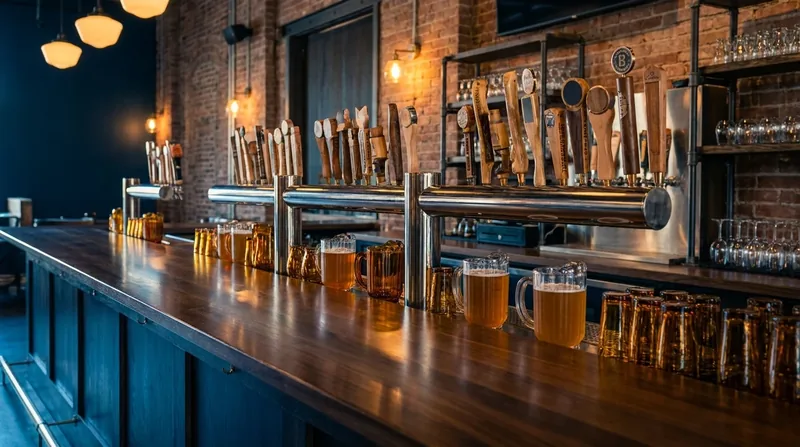
How to Start a Bar or Brewery in Arizona: Series 6, 7 and Microbrewery Licences
How to Start a Bar or Brewery in Arizona: Series 6, 7 and Microbrewery Licenses
If you want to serve drinks for a living in Arizona, the liquor license comes before the lease, the build-out, and the menu. The Department of Liquor Licenses and Control (DLLC) issues the state license, but the city or town where you plan to operate has to weigh in first. For Series 6 bar and Series 7 beer and wine bar licenses, the number of licenses is capped by county population. That cap is why most new bar owners buy an existing license instead of applying for a new one.
This guide covers the four license types most people in this space consider (Series 6 bar, Series 7 beer and wine bar, Series 12 restaurant, and the Series 3 microbrewery), plus the business setup, city approval, and tax steps that run alongside them. It is informational content, not legal or tax advice. Liquor licensing is unforgiving of small errors, so talk with a liquor-licensing attorney and a CPA before you sign a lease or buy a license.
Choose the Right License Before Anything Else
Your license type drives your location, your budget, and your timeline. Here is how the main options compare, using state fees under A.R.S. 4-209 and the DLLC annual renewal base before surcharges.
| License | What it allows | Quota limited? | State issuance fee | Annual renewal base |
|---|---|---|---|---|
| Series 6 (bar) | All spirituous liquor, on premises | Yes, by county population | $100 application plus $1,500 issuance | $150 |
| Series 7 (beer and wine bar) | Beer and wine, on premises | Yes, by county population | $100 application plus $1,500 issuance | $75 |
| Series 12 (restaurant) | Liquor sold with food service | No, but food must be at least 40% of gross revenue | $100 application plus $1,500 issuance | $500 |
| Series 3 (microbrewery) | Sell your own beer on or off premises | No | $300 issuance; confirm the application fee with DLLC | $300 |
Renewal fees above are the base amounts. DLLC adds surcharges on top, and a late renewal carries a $150 penalty, so budget above the base figure. Confirm current amounts on the DLLC website before you finalize your numbers.
Series 6 and Series 7 licenses are quota licenses. You have two ways to get one. You can buy an existing license from a current holder on the open market, where the price is negotiated between buyer and seller and is not a state fee. Or you can enter DLLC's annual liquor lottery when the agency offers new quota licenses. Lottery timing and eligibility change, so confirm the current schedule with DLLC before you plan around it.
A Series 12 restaurant license is not quota limited, but it comes with a food test. Food sales must be at least 40% of gross revenue. If you plan to rely on drink sales, a Series 12 is the wrong license.
What You Need Before You Start
Gather these items before you contact the Arizona Corporation Commission or the city clerk. Missing paperwork is the most common reason files stall.
- A business entity, usually an LLC, with Articles of Organization ready to file
- A name that meets Arizona naming rules and a name reservation if you need time
- An Arizona statutory agent who has accepted the appointment in writing
- Proof of a site you can use: a signed lease or letter of intent from the landlord
- A measured distance check from the premises to any school or its fenced recreation area
- Ownership information for everyone who holds an interest in the business
- A written plan showing hours, menu, and projected food sales if you are pursuing a Series 12
- Funds for state fees, the Transaction Privilege Tax (TPT) license, and local fees
Step 1: Form Your Entity and Reserve the Name
Most owners form an LLC because Arizona LLCs file no annual report. For-profit corporations must file an annual report with a $45 fee, so a corporation adds a yearly filing that an LLC does not. Either way, the Arizona Corporation Commission handles the entity filing through the Arizona Business Center at arizonabusinesscenter.azcc.gov.
For an LLC, the Articles of Organization (Form L010) cost a $50 filing fee. Expedited review adds $35, making an expedited filing $85 total. Accelerated service adds another tier on top of the filing fee: $100 for next day (received by 5pm), $200 for same day (received by 10am), or $400 for two-hour service (available 8am to 3pm). Accelerated service guarantees an examination within the stated window, not approval. Regular processing runs about 9 to 11 business days, and expedited processing runs about 2 to 4 business days, based on the Corporations Division processing times sheet posted as of December 29, 2025.
Your name must contain "limited liability company" or "limited company," or an abbreviation such as LLC or L.L.C. It cannot include "association," "corporation," or "incorporated." If you need time to finalize branding, a name reservation costs $10 and holds the name for 120 days.
You also need a statutory agent. Arizona's term for a registered agent, the statutory agent accepts legal papers and official notices. An individual agent must be a permanent, full-time Arizona resident with an Arizona physical address. An entity can serve, but an LLC cannot be its own statutory agent. The agent must accept the appointment in writing on Form M002. Keep that agent on record at all times, because a lapse can lead to administrative dissolution.
One more rule catches many owners off guard. An LLC must publish notice of its formation unless its statutory agent's county is Maricopa or Pima. If you are outside those counties, budget for publication and confirm the requirements with the Corporation Commission.
Step 2: Register a Trade Name If You Need One
If your bar will operate under a name that differs from your LLC name, register a trade name with the Arizona Secretary of State, Business Services Division. Trade name registration is optional in Arizona and is separate from the Corporation Commission filing. Start at azsos.gov/business/tntm and confirm the current fee there, since this guide does not list a fixed amount.
Step 3: Check the 300-Foot School Rule Before You Sign
Arizona does not allow new retail liquor licenses for premises within 300 horizontal feet of a school or its fenced recreation area (A.R.S. 4-207). Measure before you sign a lease, not after. Ask your landlord and your architect to confirm the measurement, and keep the survey in your file. Ask DLLC how it measures the distance so your method matches the agency's.
Quota licenses have their own location issues. A license you buy is tied to a specific premises and ownership, so confirm the license's status and the premises details with DLLC before you commit money.
Step 4: Secure the License
For a Series 6 or Series 7, decide whether to buy or to enter the lottery. Buying gives you a license you can use sooner, but you pay a negotiated price on top of the state fees. The lottery costs less up front but depends on timing and selection. Either path still runs through the DLLC application, so the purchase is not final until the agency approves it. Ask DLLC for the current transfer process and any forms the buyer and seller must sign.
For a Series 12, you do not need a quota license, but you do need the food test. Build your menu, kitchen plan, and point-of-sale reporting so you can show food sales at 40% or more of gross revenue.
Step 5: Clear the City or Town Approval
The city step is where many applications slow down, and it is the step most owners underestimate. Under A.R.S. 4-201, the city or town clerk posts your application on the premises for 20 days. The posting must stay visible and intact for that full period. The council then recommends approval or disapproval within 60 days of filing. That recommendation goes into the file that DLLC reviews.
Plan for the council meeting. Neighbors and nearby businesses can speak, and a council that hears concerns for the first time at the meeting may ask for more information. Contact the clerk early, ask about the agenda calendar, and prepare a short presentation covering your hours, security, parking, and noise plan.
Step 6: File the DLLC Application and Pay the State Fees
For a Series 6, Series 7, or Series 12, the state fees under A.R.S. 4-209 are a $100 application fee and a $1,500 issuance fee, for $1,600 in total before any DLLC surcharges. The Series 3 microbrewery carries a $300 issuance fee, and you should confirm its application fee directly with DLLC.
Submit a complete packet. Incomplete applications restart the clock, so use DLLC's checklist and have a second person review your forms against it before you file.
Step 7: Register for the Transaction Privilege Tax
Arizona has no general state business license. What most bars and restaurants need from the state is a Transaction Privilege Tax (TPT) license from the Arizona Department of Revenue, at $12 per location. Apply through the TPT license page at azdor.gov/business/transaction-privilege-tax/tpt-license.
Your TPT classification matters. The restaurant classification covers food or drink sold for consumption on or off the premises (A.R.S. 42-5074), so a bar that sells food will likely need the restaurant classification alongside its other classifications. The combined state rate on most taxable sales is 5.6%, and county and city rates apply on top of that. Confirm the rates that apply to your location with the Department of Revenue.
The TPT license is separate from the liquor license. Holding one does not give you the other, and DLLC will not treat your TPT registration as a substitute for the liquor license.
Step 8: Get the Local Licenses and Contractor Work Right
Cities and towns commonly require their own business license or TPT license on top of the state license. Counties issue no general business license. Check your city's business license office separately, and confirm whether your location needs anything beyond what the city already requires for liquor service.
If your build-out involves licensed trades, the Arizona Registrar of Contractors licenses contractors. Verify that every contractor holds an active license for the work they will perform before they start. If you plan to act as your own contractor on any part of the build-out, confirm what that allows with the Registrar before you begin.
Step 9: Plan for the Microbrewery Rules (Series 3)
A Series 3 microbrewery license lets you sell your own beer on or off the premises. Under A.R.S. 4-205.08, you must brew at least 1,000 gallons a year after your first year, and you may brew no more than 6.2 million gallons a year. The first-year floor does not apply, so use that year to build production and tasting-room operations.
A Series 3 does not let you sell other liquor. To pour wine, spirits, or other beer, you need a bar or restaurant license in addition to the microbrewery license. Many brewery owners add a Series 12 for food service, which brings back the 40% food test. Decide early which combination fits your business model.
Federal brewing requirements are handled separately from the Arizona license. Confirm your federal permit obligations with the Alcohol and Tobacco Tax and Trade Bureau before you brew commercially.
Common Mistakes to Avoid
- Signing a lease before measuring the school distance. A site that fails the 300-foot rule cannot be fixed by paperwork.
- Assuming Arizona has a general business license. The TPT license and city licenses are what most businesses actually need.
- Letting the city posting come down early. The 20-day posting is a requirement, and a damaged or removed notice can cost you time.
- Treating expedited service as approval. Accelerated service speeds up examination of your filing only.
- Buying a quota license without checking its status. Confirm the license, the premises, and the transfer steps with DLLC before you pay.
- Missing the food test on a Series 12. If food sales fall under 40% of gross revenue, your license is at risk.
- Assuming an LLC files an annual report. Arizona LLCs do not, but a corporation does, at $45.
- Skipping the late renewal penalty math. A late renewal adds a $150 penalty on top of the surcharges.
Tips From the Process
- Reserve your name before you pay for branding or signage. A $10 reservation is cheap insurance.
- Call the city clerk in your first week. The posting and council calendar set your real timeline.
- Start a food sales log on day one if you are pursuing a Series 12. Retroactive records are hard to defend.
- Keep copies of every filing, receipt, and approval in one folder, with a calendar entry for each renewal.
- Use the Arizona Small Business Development Center Network at arizonasbdc.com for free planning help before you commit to a site.
What Results to Expect
A well-prepared file tends to move through the state and city steps more smoothly than a rushed one, and accelerated filing services can shorten the Corporation Commission stage. Timing still depends on the city council calendar, the DLLC workload, and whether your application draws public comment. Many owners find that the process takes longer than the filing fees suggest, so plan your lease, hiring, and opening dates around the approval, not around the paperwork alone.
Once licensed, your renewal calendar becomes the main operating obligation. Keep your statutory agent current, file any corporate annual report on time, renew your liquor license before the deadline, and keep your TPT filings current.
Next Steps
Start with the license type, then build your entity, site, and city plan around it. Confirm every fee and deadline on the agency page before you commit money, since amounts and schedules change. Work with a liquor-licensing attorney on the purchase or lottery strategy, and with a CPA on entity choice and TPT classification.
Disclaimer: This article is informational content, not legal or tax advice. Arizona liquor, entity, and tax rules change, and your situation may differ from the examples here. Consult a qualified attorney and CPA before you form your business, buy a license, or sign a lease.
Keep exploring: related Arizona guides
- How to Start a Bakery Business in Arizona
- How to Start a Catering Business in Arizona
- How to Start a Winery or Vineyard in Arizona
- How to Start a Coffee Shop Business in Arizona
- Arizona Liquor License Guide
- How to Start an LLC in Arizona
- Arizona Business License
- How Much Does It Cost to Start a Business in Arizona
- All Arizona business types
- Every Arizona guide in one place